Advanced Scientific Calculator Online
Welcome to our Advanced Scientific Calculator Online. In the digital age, accessible and powerful tools are essential for students, engineers, and professionals alike. This free and precise tool puts the power of complex computation at your fingertips. Whether you are solving differential equations, determining your academic standing with our GPA Calculator, or simply double-checking a physics homework problem, having a reliable scientific calculator is indispensable.
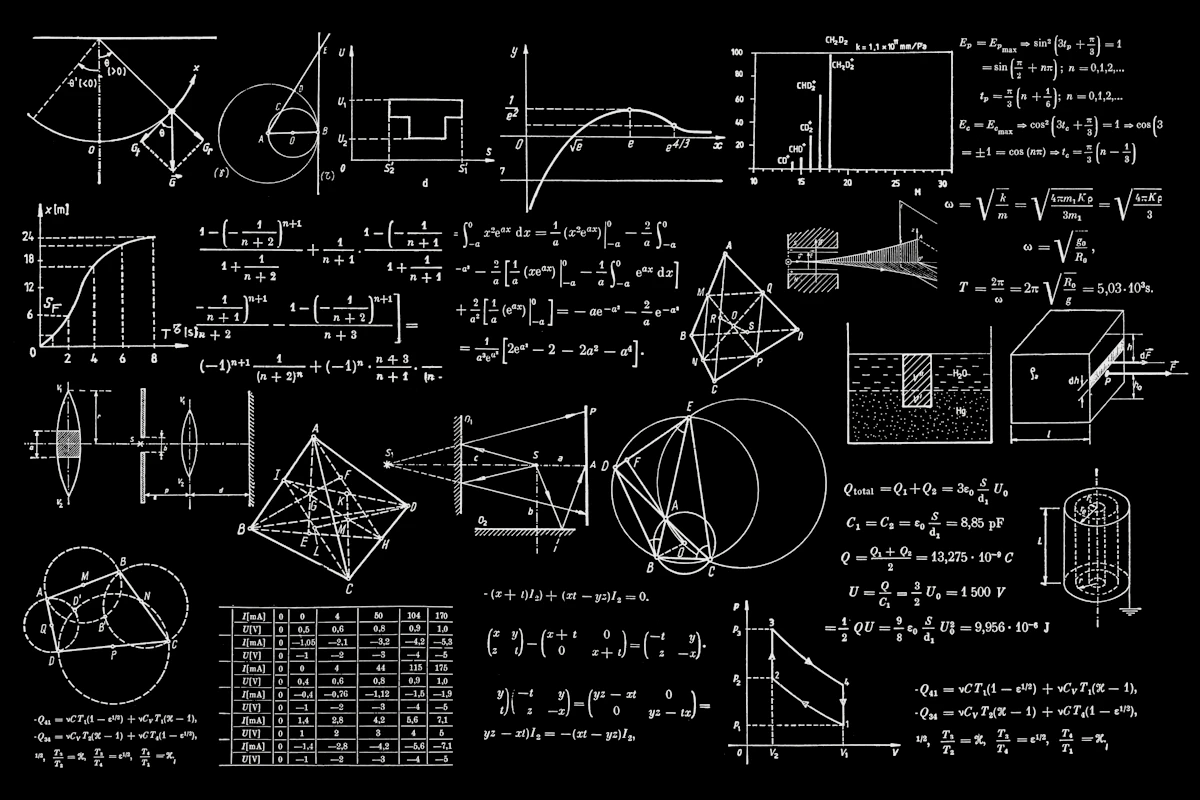
Key Functions Explained: Beyond Basic Arithmetic
While a standard calculator handles basic arithmetic, our advanced scientific calculator unlocks a deeper layer of mathematical capability. It complements other tools like our Math Calculators suite.
1. Trigonometric Functions (Sin, Cos, Tan)
Trigonometry is the study of triangles and the relationships between their sides and angles. The fundamental functions—Sine (sin), Cosine (cos), and Tangent (tan)—are critical in fields ranging from architecture to astronomy. Our calculator simplifies these operations, allowing you to input angles in radians and receive precise ratios instantly.
2. Logarithms (Log, Ln)
Logarithms are the inverse of exponentiation. They solve the question: "To what power must a base be raised to produce a given number?"
- log (Common Logarithm): Uses base 10. Commonly used in scientific notation and pH scale measurements.
- ln (Natural Logarithm): Uses the base e (Euler's number). Essential for calculating continuous growth, similar to how our Age Calculator measures time continuity.

3. Exponential and Roots (x^y, √)
Exponentiation is fundamental to algebra. The power function (x^y) allows you to calculate squares, cubes, or any higher power. This is similar to the compounding growth calculations found in financial tools like a Mortgage Calculator. Conversely, the square root (√) function help in solving quadratic equations.
Real-World Educational & Professional Uses
The utility of a scientific calculator spans across numerous disciplines, making it a versatile companion for various career paths.
Engineering & Construction
Civil and mechanical engineers rely on trigonometric functions to calculate vector forces and structural angles. Accurate calculation ensures the safety and stability of bridges and buildings. For detailed educational resources, sites like Khan Academy offer excellent tutorials that pair well with this tool.
Physics & Astronomy
From calculating the trajectory of a projectile to determining the orbital period of a planet, physics relies heavily on scientific notation and exponential functions. The ability to handle large numbers seamlessly is a hallmark of a good online scientific calculator.
Computer Science
While computers do the heavy lifting, computer scientists often use log functions to analyze the time complexity of algorithms (Big O notation). Understanding powers of 2 is also fundamental to data storage and binary systems.

A Brief History of Calculation Tools
The journey to the modern digital scientific calculator is a fascinating evolution of human ingenuity. It began with the abacus in ancient Mesopotamia, a manual tool for counting.
In the 17th century, the slide rule appeared, revolutionizing science and engineering for over 300 years. It allowed for multiplication, division, roots, and trigonometry using logarithmic scales but lacked precision for addition and subtraction.
The electronic revolution in the 1970s brought us the first handheld scientific calculators from HP and Texas Instruments. Today, we have moved beyond physical hardware to powerful web-based applications like RealCalculators, which offer the same precision without the bulk or cost.